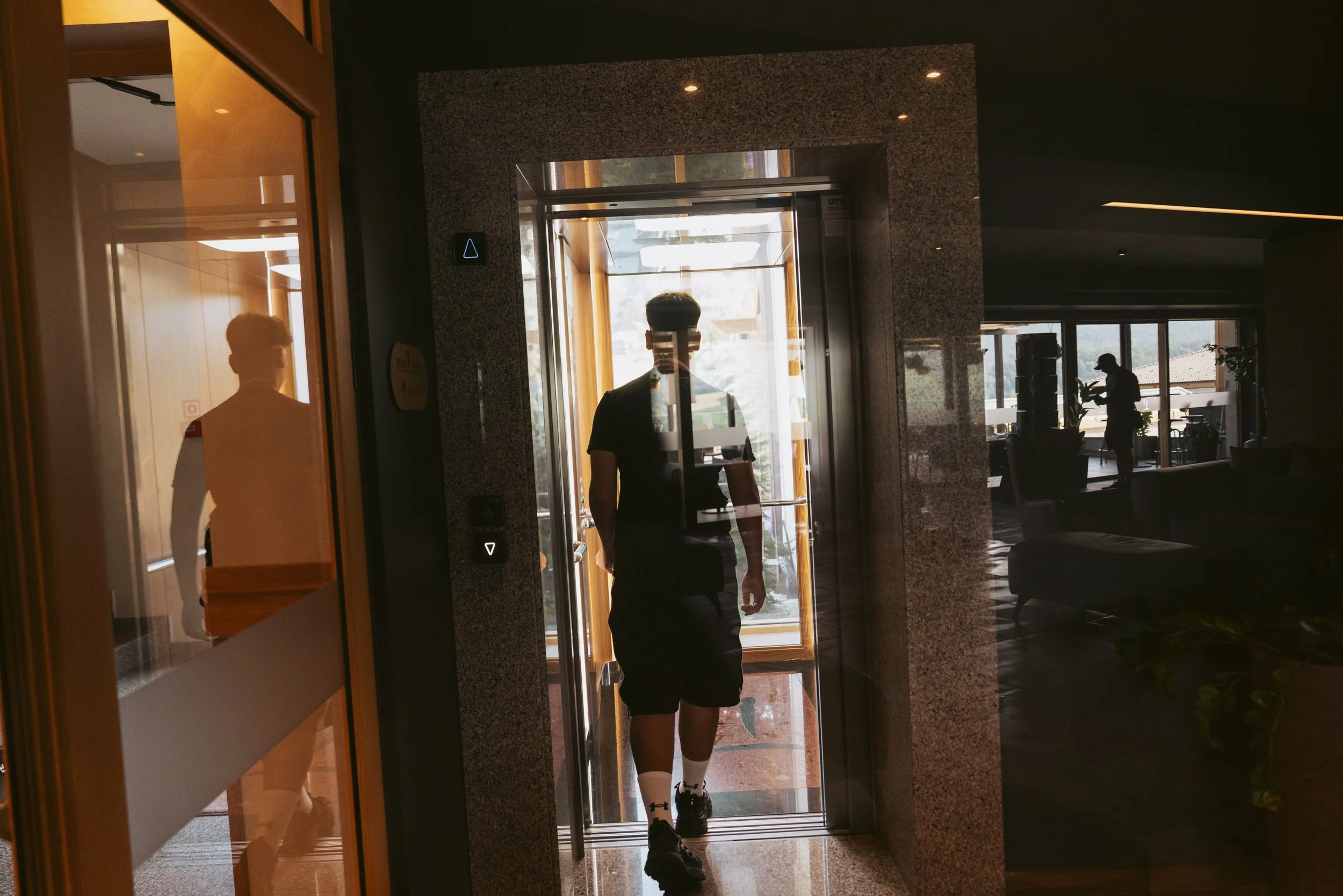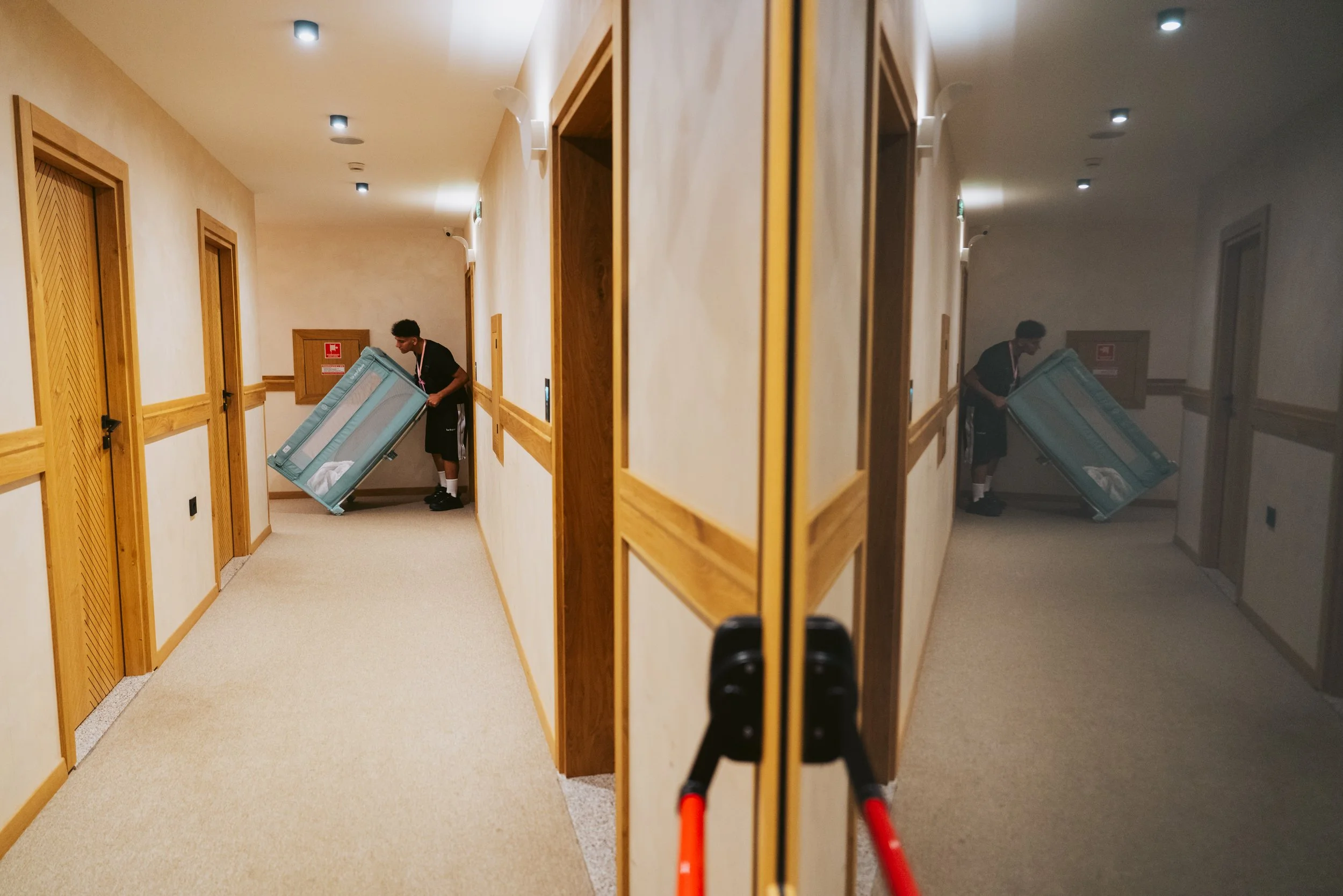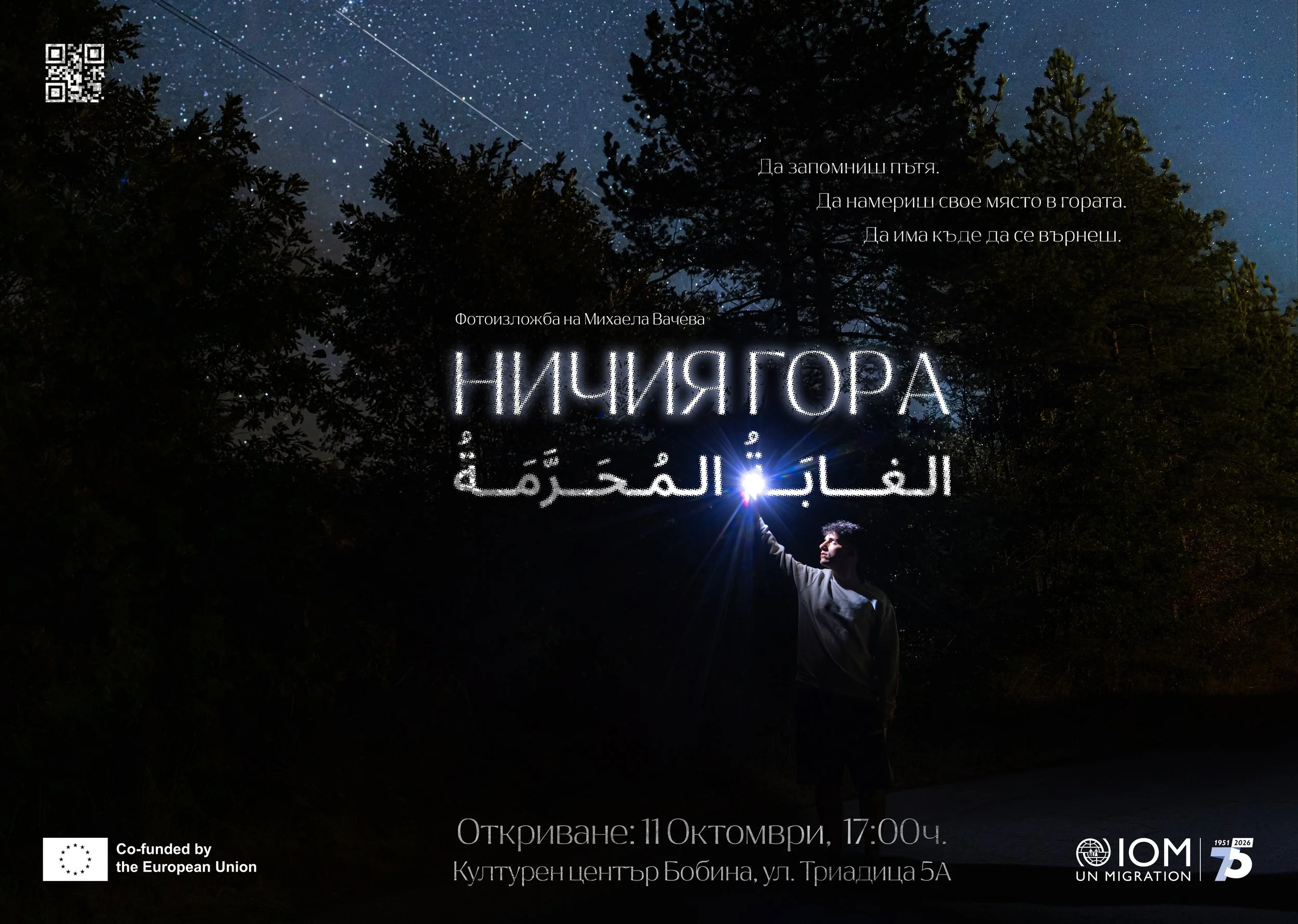
“No Man’s Woodland” is an exhibition by documentary photographer Michaela Vatcheva, which tells the story of Alaa Hadid, a young Syrian who arrived in Bulgaria as an unaccompanied refugee child. Here, he was placed with foster parents Lily and Mladen Nedyalkovi and gradually began to build a new life.
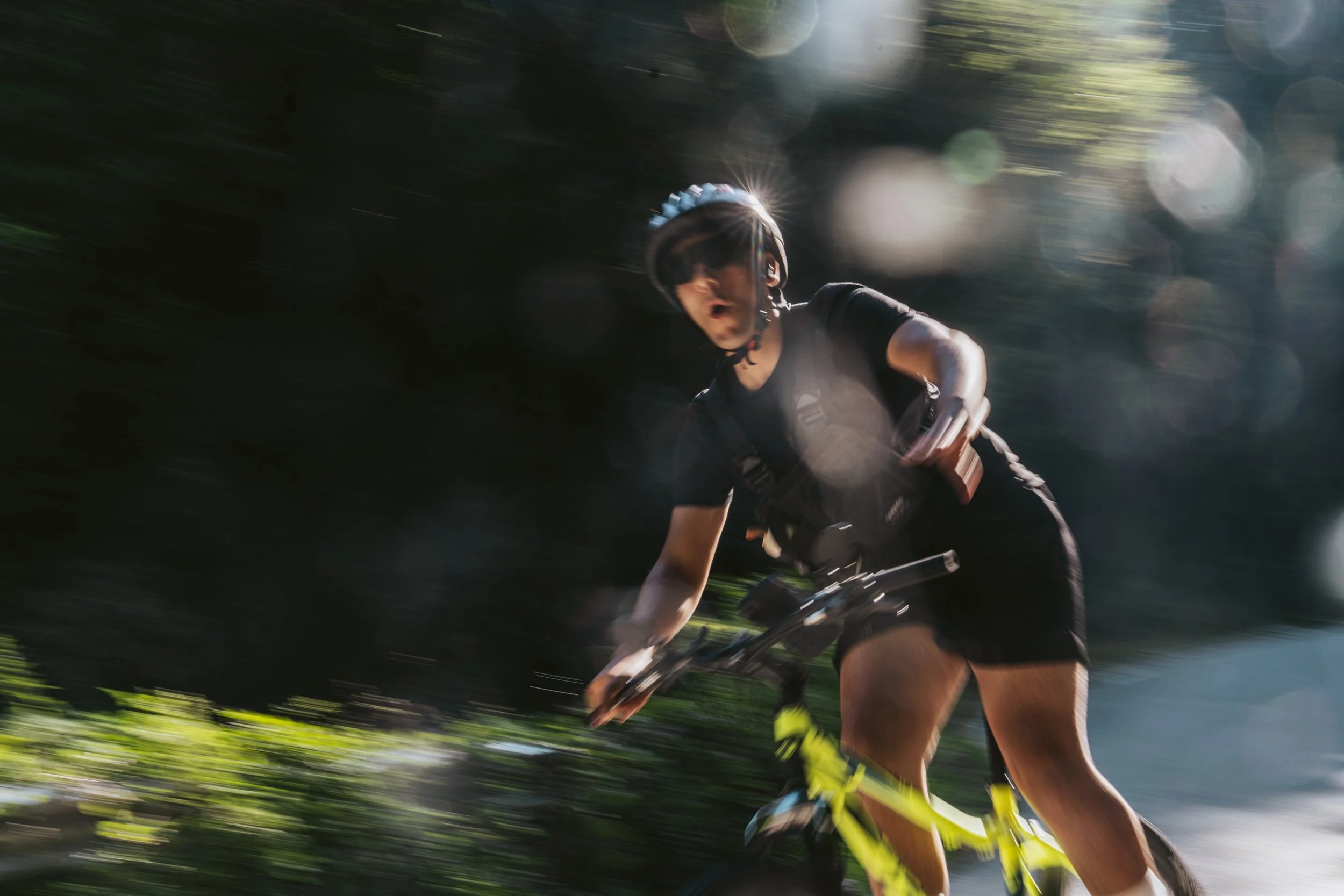
At sixteen, Alaa Hadid begins cycling from Tryavna to Veliko Tarnovo and back.
This is unusual. A child rides almost one hundred kilometers, climbing more than eight hundred meters through the forests of the Balkan Mountains. Every Saturday. Without any adult pressure. When just a few months earlier, he rode a bicycle for the first time.
For Alaa himself, however, something else is stranger yet: movement that’s not necessary.
Syria’s Civil War begins when he is one year old. It takes both of his parents. In his life, the road is something that happens to you, not something you choose. To travel for the challenge, to move for your health, or simply because you want to? This is new.
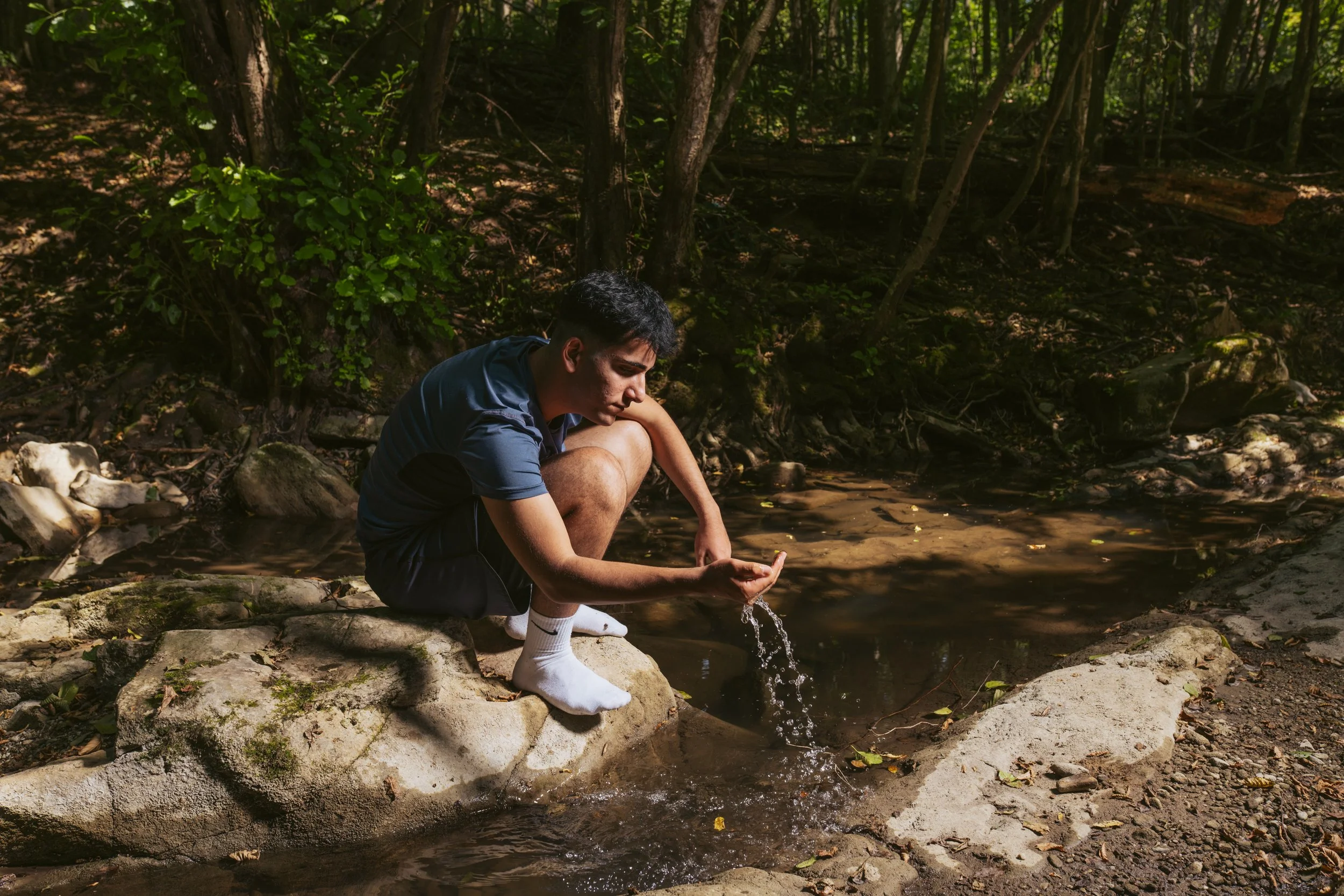
He sees a forest for the first time while crossing the border into Bulgaria. Then, it is dark. The branches hang menacingly. The shadows are deep. The sounds are unfamiliar. At first, the forest is the unknown.
Days later, the unknown begins to repeat itself. And that changes something.
A year after arriving in Bulgaria, Alaa finds himself in the home of Lily and Mladen Nedyalkovi, the first Bulgarian foster family to care for refugee children. For the first time, he gets on a bicycle. He teaches himself to ride. With the bicycle comes the possibility of testing promises like “freedom” and “safety.”
Can he really eat a döner in Tarnovo today, without a ride from Mladen? And can he enter the forest again, where the initial terror has begun shift its shape closer towards solace?
Every Saturday, Alaa rides his bicycle. Most often toward Veliko Tarnovo, sometimes toward Gabrovo, and once even as far as Ruse. As his vocabulary slowly fills with Bulgarian words, his body begins to learn another grammar. The incline. The turn. The distance between two villages, the rush of speed, the cold wind of the Balkan Mountains.
He learns the names of the places he passes through. His body learns the roads.
It is an extraordinary way to get to know a country: not from a map, not from a textbook, not from Facebook travel groups. But through your own sweat and effort.
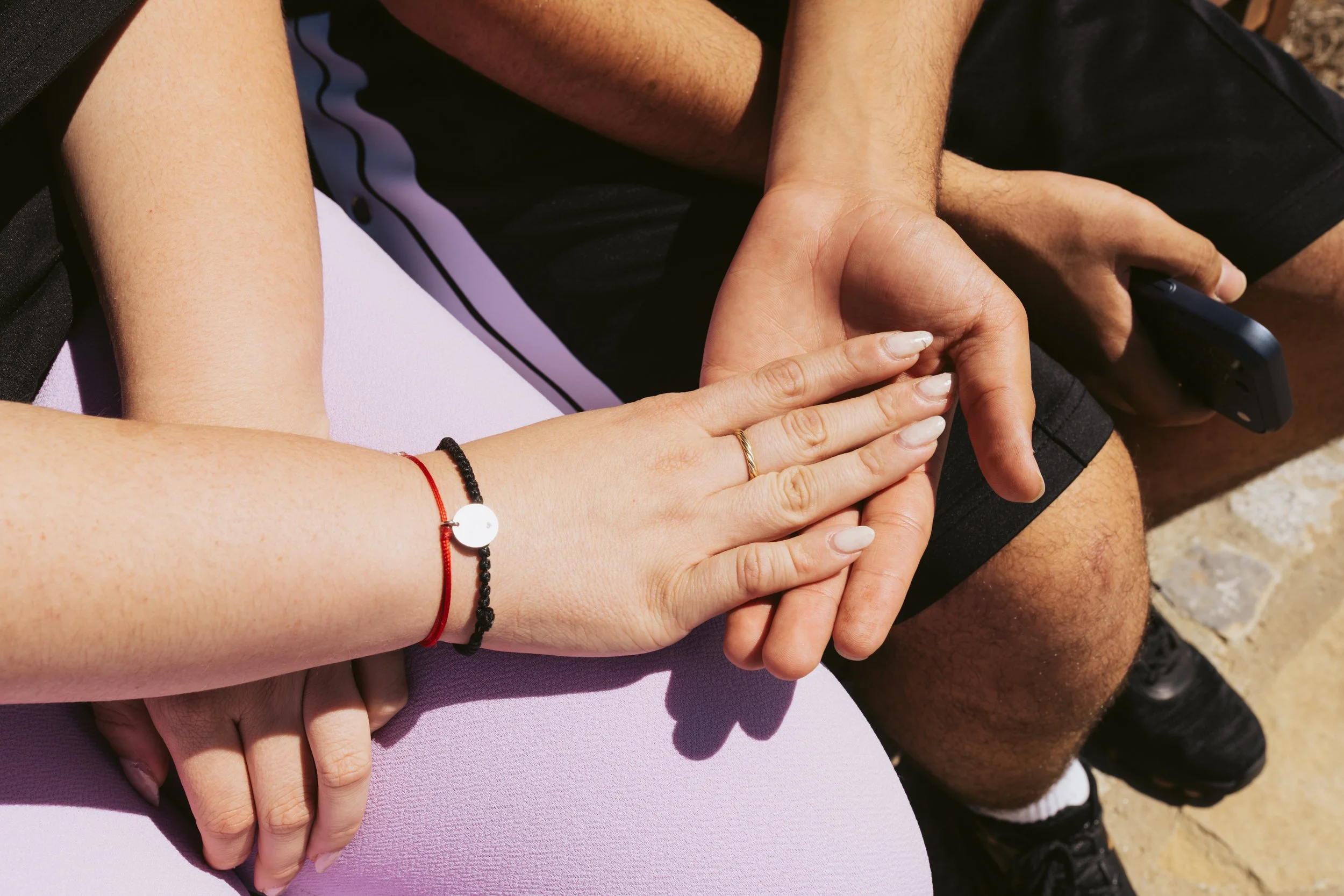
Lily and Mladen give Alaa something invaluable: a routine. Dinner, school, conversation, structure. It is these repetitions that begin shape his sense of belonging.
As of September 2026, Alaa is still awaiting a final decision on his humanitarian status.
The decision has two possible directions. One leads back to Syria, where he fears for his life. The other allows him to stay and continue building what he has begun here.
The forest is neither the home Alaa lost nor the home his foster family offers him. It is an in-between space that belongs to all of us. A place where the child chooses to return, again and again, rewriting his first encounter with it, searching for an answer to the question what it might mean to stay.
While the old life searches for its place in memory, the new one is being built from these tiny things. Learning to ride a bicycle. Remembering the road. Finding your own place in the forest. Having somewhere to return to.
Through her photographs, Michaela Vatcheva does not look for the dramatic moment of rescue, but for the life that begins to take shape afterward — through the small steps that gradually make a place your own.
The exhibition will be on view at Bobbina Cultural Space, 5A Triaditsa Street, Sofia between October 11 and 23.
On October 27, “No Man’s Forest” will also be presented in Plovdiv, at Labyrinth Gallery, 1 Angel Bukureshtliev Street, Plovdiv, and will remain on view until November 7.